



The need to improve the security system is obvious!
As reported, on the morning of January 3 a major power outage occurred in the Berlin administrative district of Steglitz-Zehlendorf, which consists of eight local areas: Lichterfelde, Lankwitz, Steglitz, Zehlendorf, Dahlem, Wannsee, Schlachtensee and Nikolassee.
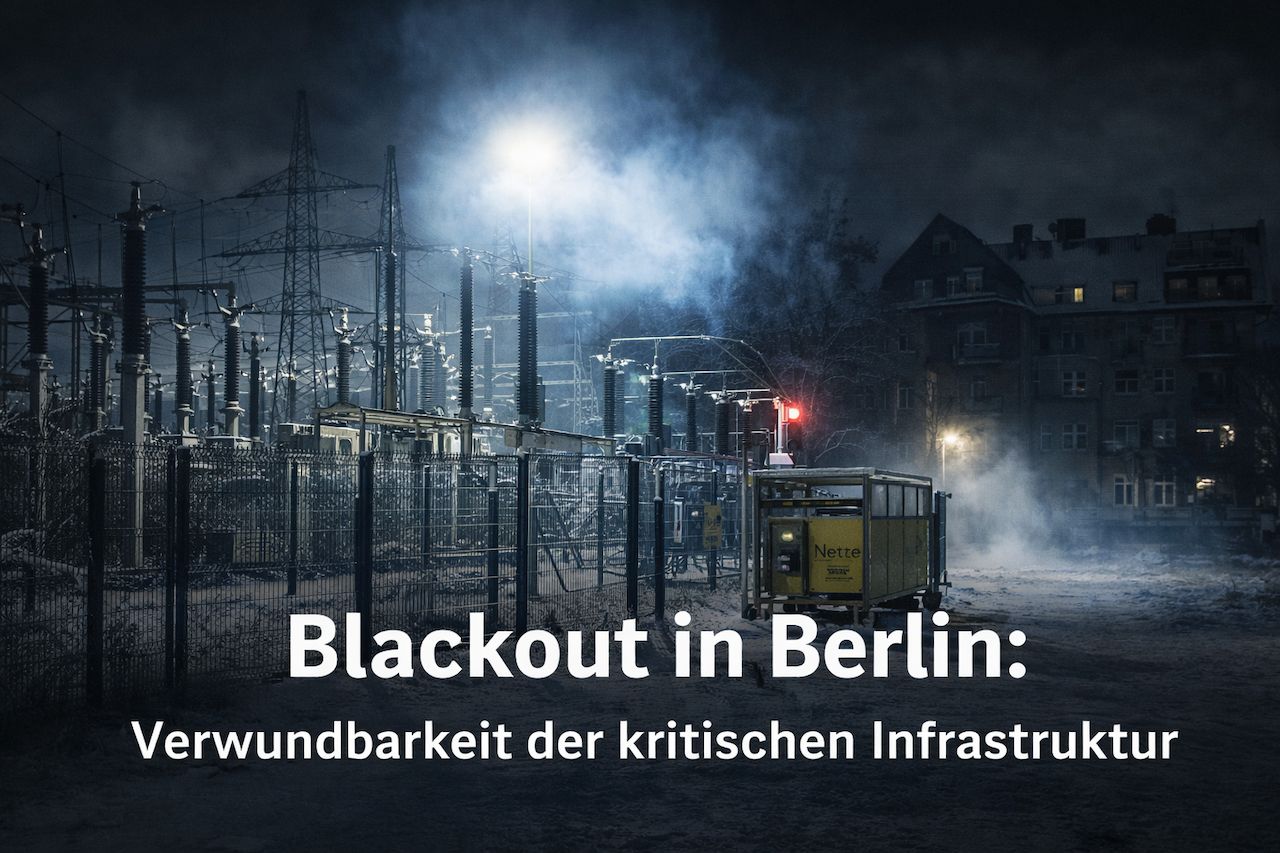
The cause was a deliberate act of arson on a suspended cable bridge crossing the Teltow Canal (TeK) near the Lichterfelde combined heat and power plant, a gas-fired facility with a capacity of 315 MW. As a result, five high-voltage cables and ten medium-voltage cables were damaged. Although the fire was extinguished relatively quickly, it took nearly five days to fully restore electricity supply throughout the entire district.
During the five-day power disruption, approximately 45,000 households and around 2,200 businesses and commercial facilities in southwest Berlin were left completely or partially without electricity and heating. At least 100,000 people were affected by the blackout. Serious problems arose with heating, mobile communications and the operation of essential infrastructure. Elevators in residential buildings were out of service, street lighting failed, social services and institutions experienced severe disruptions, and the transport system operated under significant limitations.
What did this largest energy collapse in Berlin since the end of the Second World War actually reveal?
The answer is straightforward and highly topical: the incident once again highlights the acute problem of ensuring reliable security for interconnected service structures and facilities that form the backbone of the functioning of society and the state.
In other words: critical infrastructure (known in Germany as KRITIS).
The January 2026 blackout clearly demonstrated the vulnerability of infrastructure in a modern metropolis and raised pressing questions about protection against hybrid threats and the actual resilience of critical systems. In this context, it is worth recalling that in Germany this issue has long been recognized as a matter of national security.
Germany’s Federal Office for the Protection of the Constitution (Bundesamt für Verfassungsschutz, BfV) has repeatedly stated that extremist groups increasingly view energy and transport facilities as potential and relatively easily accessible targets for attacks.
At present, relevant departments of the Berlin Senate are working on concrete measures to enhance the security of particularly vulnerable infrastructure facilities and to improve crisis management, including at the legislative level.
These measures may include the rapid involvement of private security companies by energy suppliers, as well as the installation of modern video surveillance systems to ensure continuous protection of such sites.
Tags: Berlin Senate , Berlin blackout , Steglitz Zehlendorf , power outage , arson attack , Teltow Canal , Lichterfelde power plant , energy security , critical infrastructure , KRITIS Germany , Berlin power grid , electricity restoration , infrastructure sabotage , urban security , hybrid threats , infrastructure vulnerability , crisis management , infrastructure protection , video surveillance systems , private security services , power supply failure , mobile network disruption , transport disruptions , social services disruption , heating outage , street lighting failure , national security Germany , Federal Office for the Protection of the Constitution , energy crisis Berlin , Berlin news
Categories: Latest